 en
en 
Call

China and India are two of the world's largest emerging economies and important trading partners. Tens of thousands of tons of goods are transported daily from Shenzhen, Shanghai, and Ningbo to Mumbai, Delhi, and Chennai. Whether it's mobile phone accessories, machinery, hardware, furniture, or textiles, all require sea or air transport to complete this journey across the South China Sea and the Indian Ocean. It can be said that the prosperity of Sino-Indian trade is inseparable from the support of these two major logistics arteries.
For companies engaged in Sino-Indian trade, choosing the right mode of transportation directly affects cost control (profit margin), delivery timeliness (customer trust), and cash flow (inventory pressure). Understanding the differences between sea and air freight on this specific route between China and India can help companies avoid the embarrassment of "spending more money and causing delays," and make more informed logistics decisions.
Route Overview:
Major Ports of Origin: China – Shanghai, Ningbo, Shenzhen (Yantian), Qingdao, Xiamen
Major Ports of Destination: India – New Delhi, Mumbai (Nhava Sheva), Chennai, Mundra, Visakhapatnam
Typical Route: Chinese Ports → South China Sea → Strait of Malacca → Indian Ocean → West Coast of India (approx. 20–40 days)
Key Data:
Transportation Time: 20–40 days (depending on port of origin and port of destination)
Cost: Lower (cheaper for full container loads)
Suitable Goods: Bulk commodities, heavy machinery, furniture, toys, textiles, jewelry and handicrafts, etc.
Example: Typical sea freight time from Shanghai to Mumbai (direct) is approximately 20-25 days, while from Guangzhou to Chennai (direct) is approximately 20-25 days. Compared to routes to Europe and America, the Sino-Indian route is shorter and has a greater advantage in terms of timeliness.
Route Overview:
Main Departure Airports: Shanghai (PVG), Guangzhou (CAN), Shenzhen (SZX), Hong Kong (HKG), Kunming (KMG)
Main Destination Airports: Mumbai (BOM), Delhi (DEL), Chennai (MAA), Bangalore (BLR), Hyderabad (HYD)
Typical Route: Major Chinese Cities → Direct Flights or Transit via Bangkok/Singapore/Doha → Major Indian Cities
Key Data:
Transportation Time: 3–7 days (direct flights are faster, transit is slightly slower)
Cost: Approximately 4–6 times that of sea freight (depending on season and fuel surcharges)
Suitable Goods: Urgent parts, high-value electronics, jewelry, samples, accessories
Example: A direct flight from Guangzhou to Delhi takes about 5 hours, but with pickup, customs clearance, and delivery, the total time is usually 3–7 days. While air freight is faster, its cost is significantly higher than sea freight.
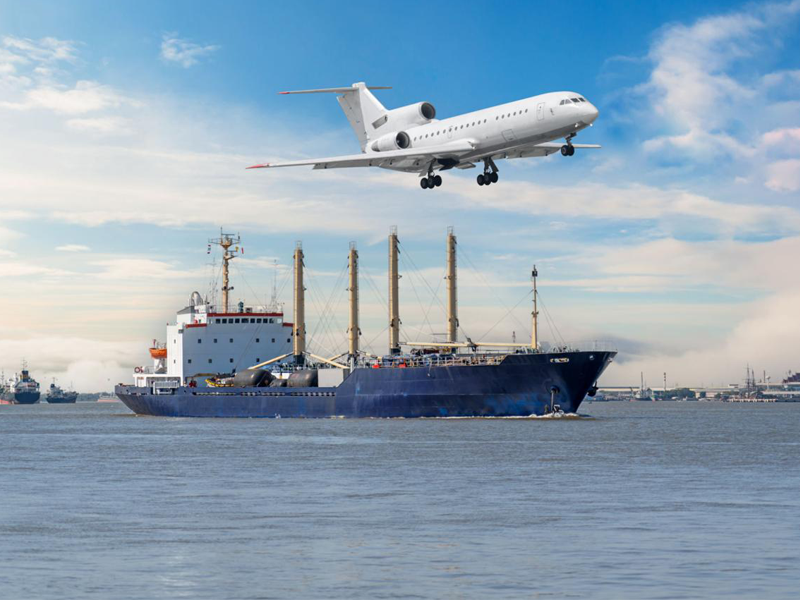
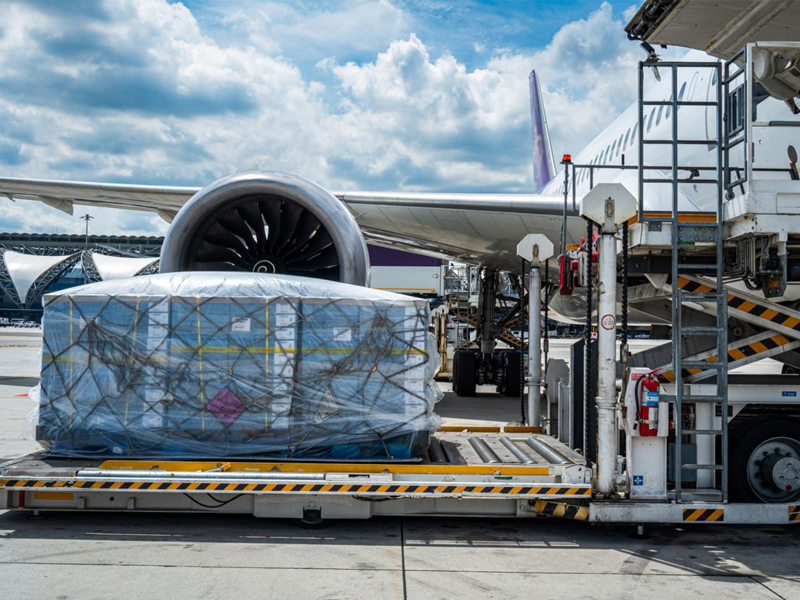
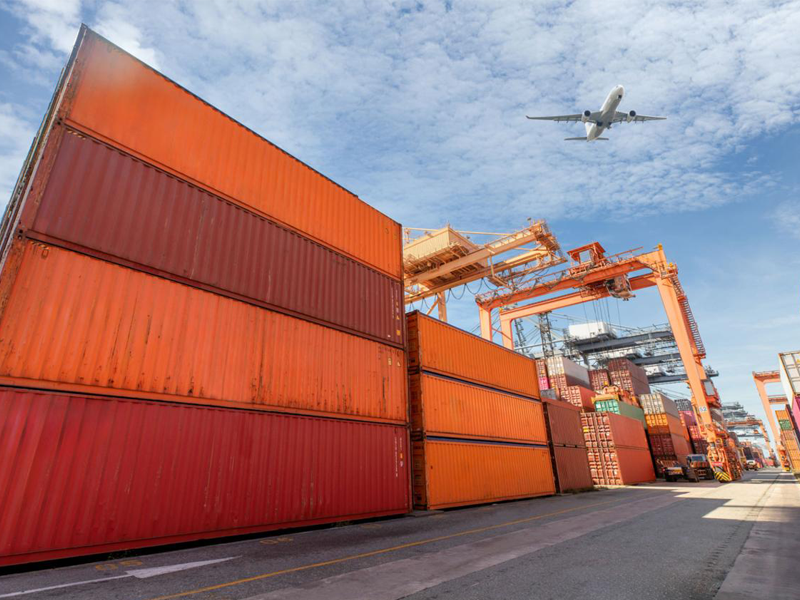
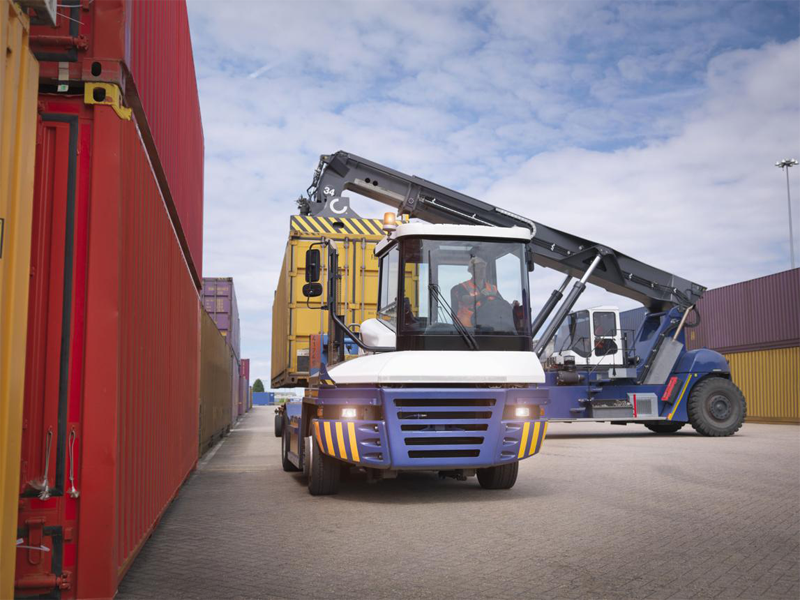
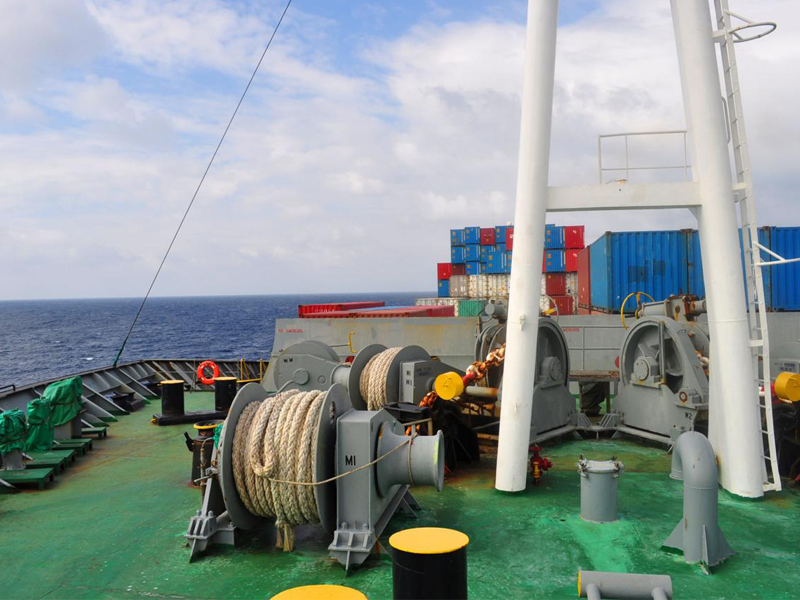
Sea Freight: The "main force" of China-India trade. Over 70% of China-India trade is conducted via sea freight. Whether it's manufactured goods exported from China to India, or ores and cotton yarn exported from India to China, sea freight is the most economical option.
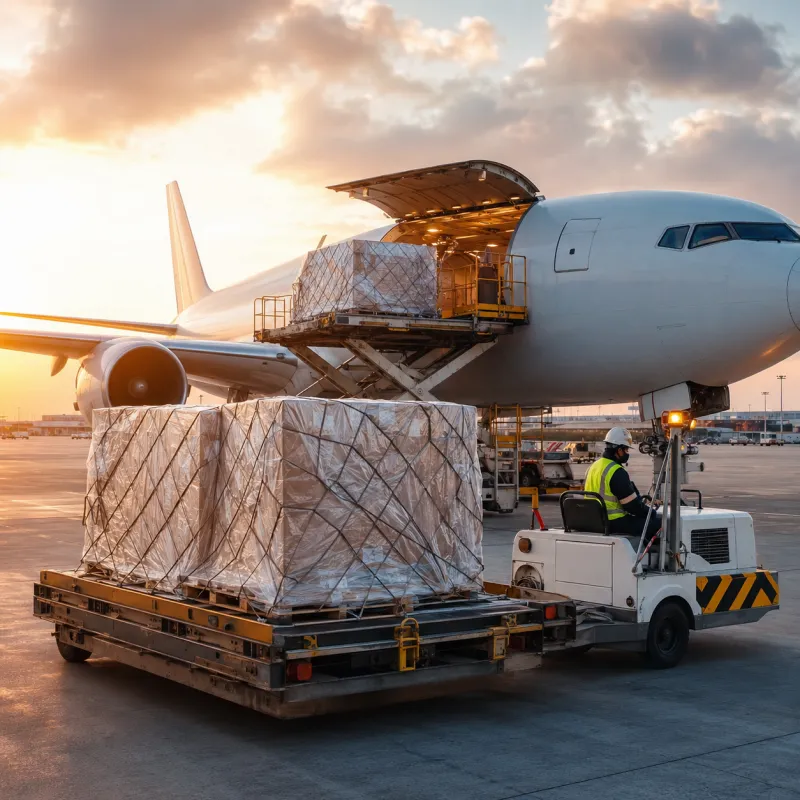
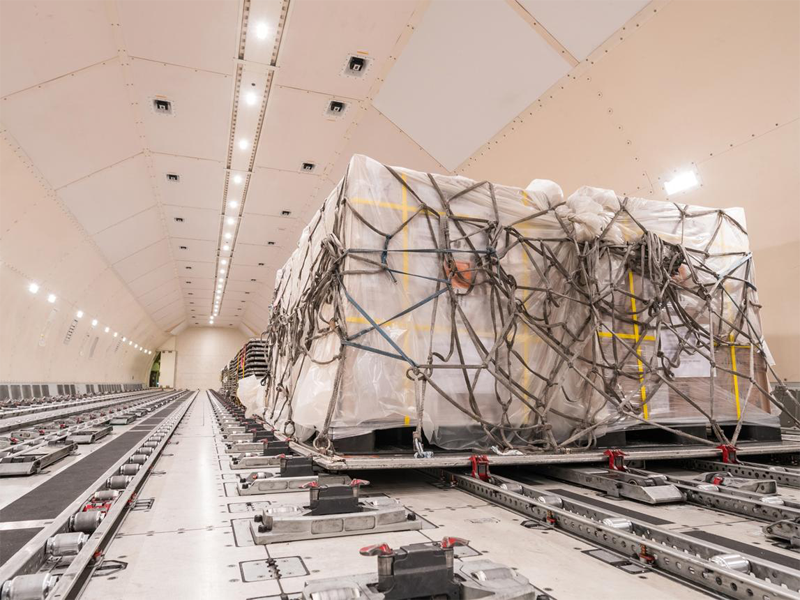
Air freight: The "firefighter" for Sino-Indian trade. When an Indian factory's production line shuts down due to a shortage of a circuit board made in Shenzhen, or when Chinese e-commerce companies need to replenish stock before the Indian festival season, air freight is the answer.
A mobile phone accessories factory in Shenzhen receives an order from a customer in Delhi, India:
Regular order (500 kg, not urgent) → Sea freight, approximately 20-40 days, lower cost.
Urgent replenishment (50 kg, customer's production line needs it) → Air freight, 3-7 days, higher cost.
The two methods are not mutually exclusive, but rather used in combination according to different needs.
Booking at the port of origin: Entrust a freight forwarder to book space with the shipping company (book 1-2 weeks in advance for popular Sino-Indian routes).
Delivery to Warehouse: The factory delivers goods to the designated warehouse or directly loads containers.
Export Customs Clearance: Submit invoices, packing lists, contracts, etc., and Chinese customs releases the goods.
Shipping: Containers are loaded onto cargo ships, and the shipping company issues a Bill of Lading (B/L).
Sea Transport: Crossing the South China Sea, the Strait of Malacca, and the Indian Ocean, approximately 20–40 days.
Port Unloading: The ship arrives at the destination port in India (e.g., Navarrewa), and the goods are unloaded and stored in the yard.
Indian Import Customs Clearance: The Indian consignee submits the Bill of Lading, invoice, packing list, BIS certification (if required), import/export code (IEC), GST certificate, etc., and releases the goods after paying customs duties.
Indian Delivery: Truck or train transport to the final address (Mumbai city center or inland cities such as Delhi and Bangalore).
Booking and Pickup: Contact an air freight forwarder to reserve flight space (space is limited on the China-India route during peak season).
Palletizing and Security Check: Goods are delivered to the airport cargo terminal, assembled into pallets according to aircraft dimensions, and pass through security.
Export Customs Declaration: Coordinate with Chinese customs for expedited release (usually within half a day).
Loading and Takeoff: Direct flights (e.g., Guangzhou → Delhi, approximately 5 hours) or transit flights (e.g., via Bangkok or Hong Kong).
Arrival and Unloading: Arrive at an Indian airport (e.g., Delhi IGI Airport) and unload to the cargo terminal.
Indian Import Customs Clearance: Submit AWB, invoice, packing list, etc. Indian customs inspect (machine or manual) and release the goods.
Last Mile Delivery: Usually delivered to the Indian customer within 24 hours.
Special Notes for China-India Trade: Indian customs is stricter regarding under-declared prices, sensitive product names, and brand infringement; complete documentation must be prepared in advance for both air and sea freight.
| Factor | Sea freight (China → India) | Air freight (China → India) |
| Time | 20–40 days | 3–7 days |
| Transport capacity | High, one container can hold 20-25 tons. | Low, at most tens of tons per batch |
| Suitable weight | Greater than 500 kg | Less than 500 kg (light, slightly expensive) |
| Traceability | Low (location updated every few days) | High (real-time) |
| Indian customs clearance complexity | Medium level, requires BIS certification, etc. | Higher, higher inspection rate |
| Risk | Slowness leads to capital occupation | Risks of missed flights, lost packages, and damage |
| Best Use | Daily replenishment, bulk stocking | Emergency restocking, high-value samples |
Containers: 20ft/40ft standard containers, high cube containers, refrigerated containers (for frozen food exports from India).
Shipping Companies: COSCO Shipping, Maersk, MSC, OOCL, etc., all provide services on the China-India route.
Bill of Lading (B/L): A core document; Indian banks often require "to order" B/Ls for letter of credit settlement.
China-India Freight Forwarders: Local agents familiar with bilateral customs clearance, able to secure shipping space, and capable of prepaying customs duties are crucial.
Special Requirements of Indian Customs:
BIS Certification: Some products (such as electronics, toys, and steel) require certification from the Bureau of Indian Standards.
IEC Code (Importer Exporter Code): Required by all Indian importers and exporters.
GST Certificate: The Goods and Services Tax Registration Certificate for India, used for tax refunds and customs clearance.
Air Waybill (AWB): Non-transferable, but must be consistent with the invoice and packing list.
Major Airlines: Air India, Cathay Pacific, Emirates, SF Express, etc.
Airport Freight Forwarders: Have operational teams at airports such as Delhi and Mumbai, enabling faster customs clearance.
Dedicated Channel for Indian E-commerce: Some freight forwarders offer "double clearance and tax included" services, suitable for small parcels directly shipped to Indian C-end customers.
Real-time Tracking System: Due to the long China-India route, shipping companies or freight forwarders provide container GPS positioning, updating the location every few hours for easy notification to Indian customers.
Indian Customs Clearance Pre-screening System: Uploading BIS certificates, IEC, GST, and invoices to the Indian customs system in advance reduces inspection time upon arrival.
LCL vs. FCL Selection: LCL is recommended for cargo under 15 cubic meters for cost savings; FCL is suitable for cargo over 15 cubic meters.
China-India Sea Freight + Indian Inland Intermodal Transport: Door-to-door service from Navsheva Port to Delhi, Bangalore, and other destinations can be achieved via rail or truck.
Off-Season Shipping: Avoid shipping peaks before Chinese New Year (around February) and Diwali (October-November) in India for lower freight rates.
Flexible LCL Utilization: LCL shipping is more cost-effective for small batches of goods, but note that unpacking fees for LCL shipments in India are high, so confirm in advance.
Choose Forwarding Services: Some China-India dedicated freight forwarders offer "door-to-door" services with customs clearance and taxes included, suitable for small parcels in cross-border e-commerce.
Utilize the China-India Free Trade Agreement: Although there is no comprehensive free trade agreement between China and India, some products (such as those under the Asia-Pacific Trade Agreement) can enjoy tariff preferences, requiring a certificate of origin (FORM A).
Logistics between China and India is never a simple "sea freight vs. air freight" choice, but rather a flexible combination and dynamic balance based on cargo characteristics, time requirements, budget constraints, and customer needs. As the "main artery" of Sino-Indian trade, maritime transport, with its extremely low cost and massive capacity, handles the vast majority of daily inventory and regular orders, forming the cornerstone of a stable supply chain. Air freight, on the other hand, acts as an "emergency channel," providing crucial support for sudden demands, high-value goods, and peak season replenishment through speed and flexibility. Therefore, savvy Sino-Indian traders do not cling to one method. Instead, they use maritime transport to build safety stock and control costs, while leveraging air freight to address uncertainties and seize market opportunities. They choose a professional logistics partner who is well-versed in bilateral customs clearance rules and can provide stable warehousing and door-to-door services, transforming the complementary advantages of both models into genuine supply chain competitiveness. After all, in the fierce competition of Sino-Indian trade, whoever can consistently deliver the right products to customers at the right time, at a reasonable cost, and accurately will ultimately win customer trust and long-term orders.