 en
en 


Call

When many Chinese suppliers export to India for the first time, the most common problem they encounter is not "whether the goods can be shipped," but rather:
The goods had already been produced and even booked, only to discover that importing to India requires certification or compliance documents.
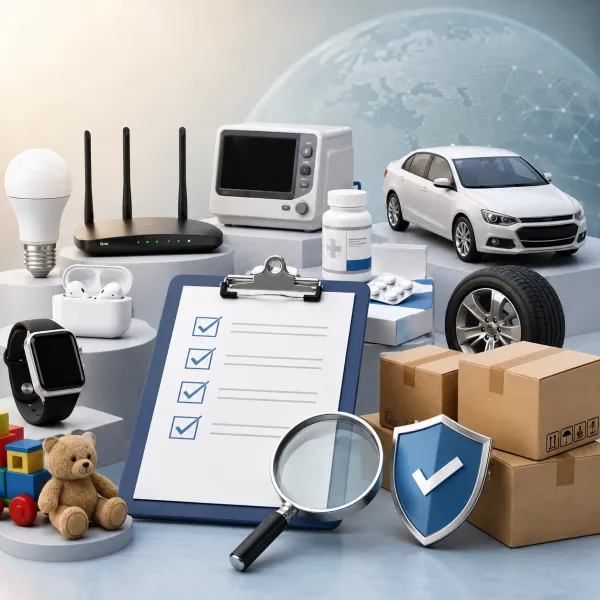
India does not have a single "uniform import certification" that applies to all goods. Different products are regulated by different regulatory bodies, and the need for certification, registration, testing, or licensing typically depends on the product category, intended use, technical specifications, HS Code, and the latest Indian regulations .
For example, some products need to pay attention to BIS , devices with wireless capabilities may involve WPC/ETA , automobiles and related products may involve CMVR/type certification , while pharmaceuticals and medical devices are mainly regulated by CDSCO .
Therefore, before exporting to India, China should not only ask:
What certifications does this product require?
Instead, we should first confirm:
What regulatory, certification, testing, labeling, and import qualification requirements must this product meet to enter the Indian market?
The Bureau of Indian Standards (BIS) is one of the most common regulatory systems encountered by Chinese companies exporting to India.
It is important to note that BIS certification is not mandatory for all products . BIS officially states that its certification system is generally voluntary, but the Indian government can include certain products in the mandatory certification scope through Quality Control Orders (QCOs) . Products included in the mandatory scope must obtain BIS approval or meet the corresponding conformity assessment requirements.
Common products that require special attention include:
· Electronic and electrical products
· LED lighting fixtures and lighting products
· Wires and cables
· Home appliances
· Iron and steel products
· Some industrial products
· Toy
· Some chemical and building materials products
However, it's important to note that you cannot determine whether a BIS is required solely based on the product name . Different models, specifications, and applications within the same product category may be subject to different Indian standards or QCOs.
Recommendation:
Product Name → HS Code → Product Model/Specification → Corresponding Indian Standard → Whether it falls under the mandatory scope of QCO
Please confirm.
For overseas manufacturers, BIS offers the FMCS (Foreign Manufacturers Certification Scheme) . According to official BIS information, the FMCS is primarily aimed at manufacturers outside of India. Additionally, some electronic and IT products may also be eligible for BIS's CRS (Compulsory Registration Scheme) . Therefore, it's not accurate to simply categorize all BIS products under the same certification model.
· First, confirm whether the product falls under the latest QCO mandatory scope.
· Confirm applicable Indian standards and certification/registration schemes
· Prepare product technical data, factory data, and test data.
· Determine whether factory audits or Indian laboratory testing are required based on the specific plan.
· Overseas manufacturers should confirm whether AIR (Authorized Indian Representative) is required based on the applicable scheme.
It is worth noting that BIS currently stipulates that FMCS will only accept applications submitted through the online portal starting June 1, 2026 .
If the product involves:
Wi-Fi, Bluetooth, RF, wireless communication or other radio frequency transmission functions
When exporting to India, it is necessary to further confirm the relevant requirements of WPC.
WPC (Wireless Planning & Coordination) is part of the Indian Department of Telecommunications (DoT) system.
Common products that require special attention include:
· Wi-Fi devices
· Bluetooth devices
· wireless headphones
· smartwatch
· router
· wireless speaker
· Wireless camera equipment
· Some wireless control devices
· Other products with RF transmission capabilities
One of the more common ones is ETA (Equipment Type Approval) .
The Indian DoT (Domain of Technology) has clarified that eligible wireless devices operating on unlicensed frequency bands permitted in India can obtain an ETA (Electronic Toll Collection) through a **Self-Declaration** process. Officially listed products include mobile phones, laptops, smartwatches, headphones, speakers, printers, scanners, camera equipment, and some short-range wireless devices.
"For wireless products operating in unlicensed frequency bands permitted in India, an ETA can be processed according to the specific product and frequency band requirements; some products can adopt a self-declaration method."
· Confirm whether the product has wireless functions such as RF / Wi-Fi / Bluetooth.
· Confirm operating frequency band and power
· Preparing an RF Test Report
· Prepare product technical data
· Confirm the responsibility of the Indian importer or authorized Indian representative.
· Determine if an ETA is needed
· If it pertains to telecommunications equipment, further investigation is needed to determine if it involves MTCTE.
In addition, WPC/ETA and MTCTE are not the same thing .
MTCTE applies to telecommunications equipment within the scope defined by Indian regulations. The Indian DoT currently stipulates that telecommunications equipment included in the MTCTE must obtain a valid conformity assessment certificate before being sold, deployed, or used in India; foreign OEMs can apply through the **Authorized Indian Representative (AIR)**.
I suggest you revise this part of the original text significantly .
Strictly speaking, CMVR is not a unified certification certificate like a "BIS certificate" .
CMVR usually refers to India's Central Motor Vehicles Rules system. When vehicles and parts enter the Indian market, they may be subject to type approval, vehicle/engine/parts conformity, and related testing and certification.
The Automotive Research Association of India (ARAI) currently provides type approval and related compliance services for vehicles, engines, parts, generator sets, equipment, and modifications.
The products that may be involved include:
· two-wheeled vehicle
· tricycle
· Passenger cars
· Commercial vehicles
· engine
· Automotive parts
· tire
· Braking-related products
· Safety glass
· rearview mirror
· Car products such as horns
· Some engineering vehicles and equipment
If the exported goods are complete vehicles, engines, or regulated parts, it is recommended to confirm before shipment:
Product Category → Applicable CMVR/AIS Requirements → Type Approval Required? → Testing Organization → Indian Import/Registration Requirements
If the exported products belong to:
· drug
· medical devices
· IVD in vitro diagnostic products
· biological products
· cosmetic
· Other products subject to drug and medical product regulations
Therefore, we need to focus on CDSCO (Central Drugs Standard Control Organization) .
Among them, medical devices are managed using risk classification :
· Class A: Low Risk
· Class B: Low to Medium Risk
· Class C: Medium to High Risk
· Class D: High Risk
According to official information from the Indian CDSCO, applications for import licenses for medical devices are submitted through the SUGAM system under MD-14 , and an MD-15 import license is obtained upon approval .
IVD also has corresponding import licensing requirements.
Therefore, these types of products cannot be processed according to the export procedures for ordinary goods.
· First, confirm whether the product falls under the regulatory scope of Indian medical devices/pharmaceuticals/cosmetics.
· Confirm product risk level or product category
· Confirmation of requirements for Indian importers and authorized agents
· Prepare relevant information on the manufacturer, product, testing, and quality system.
· Apply for a license/registration through the relevant regulatory system.
· Formal import will be arranged after the permit is confirmed.
Many companies believe that:
"The absence of BIS / WPC / CMVR / CDSCO means that it can be imported directly."
That's not actually the case.
Depending on the product category, it may also involve:
For some household appliances and energy-related equipment, it is necessary to pay attention to the energy efficiency label and related requirements of the Indian Bureau of Energy Efficiency (BEE) .
BEE's current Standards & Labelling (S&L) program covers multiple equipment/appliance categories, some of which are mandatory and others are voluntary.
Electronic products, batteries, plastic packaging, and other products may be subject to Indian **EPR (Extended Producer Responsibility)** requirements.
The specifics depend on the product type and the applicable EPR regime in India.
For some pre-packaged goods, it is also necessary to pay attention to the requirements of India's Legal Metrology regarding packaging, labeling, and declaration information.
If the equipment falls within the scope of Indian regulations, further verification of the MTCTE is required.
India currently requires that telecommunications equipment included in the MTCTE must obtain the corresponding conformity assessment certificate before it can be sold, deployed, or used in India.
Even if a product does not have a separate "certification certificate", it may be because:
· Manufacturer Information
· Importer Information
· Product Model
· Product Specifications
· country of origin
· Packaging Information
· Tag content
Non-compliance with Indian requirements may affect imports or customs clearance.
If your Indian customer tells you:
"This product requires BIS / WPC / CMVR / CDSCO."
Do not book shipping immediately, and do not wait until the goods arrive in India before processing them.
We recommend confirming using the following process:
Prepare in advance:
· Product Name
· Product Images
· Product Uses
· Product Specifications
· model
· brand
· HS Code
· Technical parameters
· Does it have wireless functionality?
· Does it involve food, medicine or medical use?
Determine based on the specific circumstances of the product:
BIS? WPC/ETA? CMVR? CDSCO? BEE? EPR? MTCTE? Or other regulatory requirements?
For some products, the compliance process may involve not only Chinese manufacturers, but also:
Indian importers, authorized Indian representatives, Indian registered entities, or local agents.
Therefore, do not assume that "a Chinese factory obtaining a certificate" means that the goods can definitely be imported.
Especially for products with strict regulatory requirements, it is recommended to use:
Product Confirmation → Regulatory Verification → Certification/Registration → Customs Clearance Document Confirmation → Booking → Shipment
Instead of:
Production first → Booking first → Certification processed after arrival in India.
This can reduce delays and additional costs incurred after goods arrive at the port due to certification, registration, labeling, or import qualification issues.
If Chinese suppliers are unsure whether their products are regulated, they can prepare the following before booking:
Product Name + Image + HS Code + Product Specifications + Application + Technical Parameters
We entrusted a professional China-India logistics team to make an initial assessment, while also having the Indian importer confirm the local import qualifications and the latest compliance requirements.
China's exports to India are not:
"All products need to be certified."
No, it isn't either:
"Without BIS, we cannot import."
What really needs to be judged is:
Product Category + HS Code + Product Application + Technical Specifications + Latest Indian Regulations + Importer Qualifications
They jointly decide what requirements goods must meet to enter the Indian market.
BIS, WPC/ETA, CMVR, CDSCO, BEE, EPR, MTCTE, etc., are just different links in India's import compliance system.
For Chinese suppliers, the most important thing is:
First confirm compliance, then arrange shipment.
Especially when dealing with electronic products, wireless devices, auto parts, medical devices, pharmaceuticals, food, and special industrial products, do not wait until the goods have arrived at Indian ports to discover that they lack certification or import permits.
Special reminder: India's QCO, product catalogs, certification system, and import regulatory requirements may be subject to continuous adjustments. This article is intended for Chinese exporters to make preliminary judgments. Whether a specific product requires certification, registration, testing, or import licenses should be determined by the latest regulations from the relevant Indian authorities.
BIS Official Website: https://www.bis.gov.in/?lang=en
India's DoT official website: https://www.eservices.dot.gov.in/equipment-type-approval-eta?utm_source=chatgpt.com
Official website of CDSCO India: https://www.cdsco.gov.in/opencms/opencms/en/About-us/Introduction/