 en
en 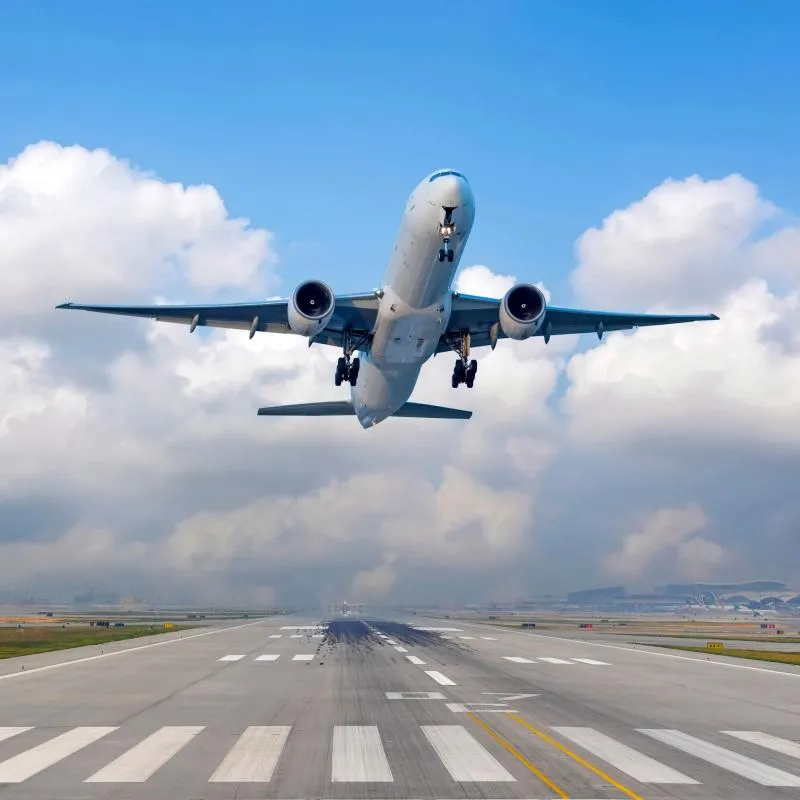

Call

Shipping goods from China to India by air has become an important logistics solution for businesses that require faster delivery, reliable supply chains, and better inventory control. However, many importers struggle to understand how air freight cargo rates are calculated, why prices fluctuate, and how to reduce unnecessary transportation costs.
The cost of air freight from China to India depends on multiple factors, including shipment weight, cargo volume, airline capacity, fuel surcharges, customs requirements, and service options. By understanding these cost drivers and working with a specialized logistics partner, businesses can achieve faster delivery while maintaining better control over shipping expenses.
Unlike comprehensive logistics providers covering global routes, JTUO specializes in China–India air freight space supply, leveraging long-term partnerships with airline resource holders to provide stable air cargo capacity through block space agreements and consolidated cargo allocation.
Our integrated model addresses peak-season capacity shortages, unstable freight rates, and fragmented logistics operations, improving scheduling reliability, warehouse coordination efficiency, and overall air freight stability.
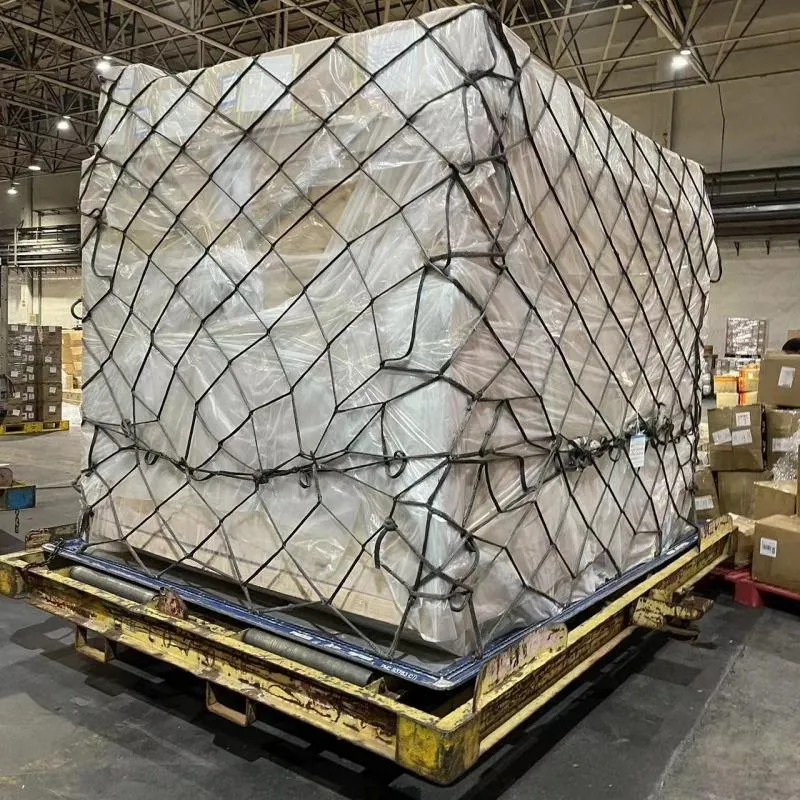
The calculation of air freight cargo rates is more complex than simply multiplying cargo weight by a fixed price. Airlines and freight forwarders usually calculate charges based on the chargeable weight, which is the higher value between actual weight and volumetric weight.
The basic calculation method is:
Chargeable Weight = Higher Value of Actual Weight or Volumetric Weight
For example:
| Shipment Type | Actual Weight | Volumetric Weight | Charged Weight |
|---|---|---|---|
| Compact machinery parts | 500 kg | 350 kg | 500 kg |
| Lightweight products | 200 kg | 450 kg | 450 kg |
This calculation method is especially important for products with large dimensions but relatively low weight, such as textiles, packaging materials, and plastic products.
Besides weight, several other elements influence the final quotation:
| Cost Factor | Impact on Air Freight Price |
|---|---|
| Cargo weight and volume | Larger shipments usually receive better unit rates |
| Departure airport | Different airports have different airline availability |
| Destination city | Major Indian airports may offer more competitive pricing |
| Fuel surcharge | Changes according to international fuel costs |
| Peak season demand | Prices may increase during high-demand periods |
| Customs services | Compliance support affects total logistics cost |
Choosing a professional China–India logistics provider helps importers understand these factors and avoid unexpected charges.
Many businesses assume that air shipping prices are mainly determined by weight. In reality, air freight from China to India involves several market and operational factors.
Regular importers often receive better freight solutions because logistics providers can optimize transportation schedules and consolidate shipments.
For example:
Small urgent shipments may require express air services.
Regular commercial shipments may benefit from scheduled air cargo solutions.
Multiple orders can sometimes be consolidated to reduce the average shipping cost.
China and India both have multiple international cargo hubs.
Common China departure airports include:
Guangzhou Baiyun International Airport
Shenzhen Bao’an International Airport
Shanghai Pudong International Airport
Hangzhou Xiaoshan International Airport
Popular Indian destinations include:
Delhi
Mumbai
Bangalore
Chennai
Selecting the right airport combination can significantly influence transit time and pricing.
Different products require different logistics arrangements.
Examples:
Electronics may require careful handling and documentation.
Machinery parts may require accurate classification.
Commercial goods may require complete customs compliance.
Sensitive products may require special transportation arrangements.
A professional freight partner can help identify the correct shipping method before booking.
Reducing logistics expenses does not always mean choosing the cheapest transportation option. A lower-cost solution should also maintain delivery reliability and customs efficiency.
Here are practical ways to optimize shipping expenses.
Packaging directly affects volumetric weight.
Businesses can reduce costs by:
Using compact packaging designs
Removing unnecessary packaging materials
Improving carton arrangement
Reducing unused space
For lightweight but bulky products, packaging optimization can create significant savings.
Not every shipment requires premium air delivery.
Businesses can compare:
| Shipping Method | Best For | Delivery Speed |
|---|---|---|
| Express Air | Samples and urgent orders | Fastest |
| Standard Air Freight | Commercial shipments | Balanced |
| Sea Freight | Large-volume cargo | Lowest cost |
Selecting the correct transportation method based on urgency and product value helps avoid unnecessary expenses.
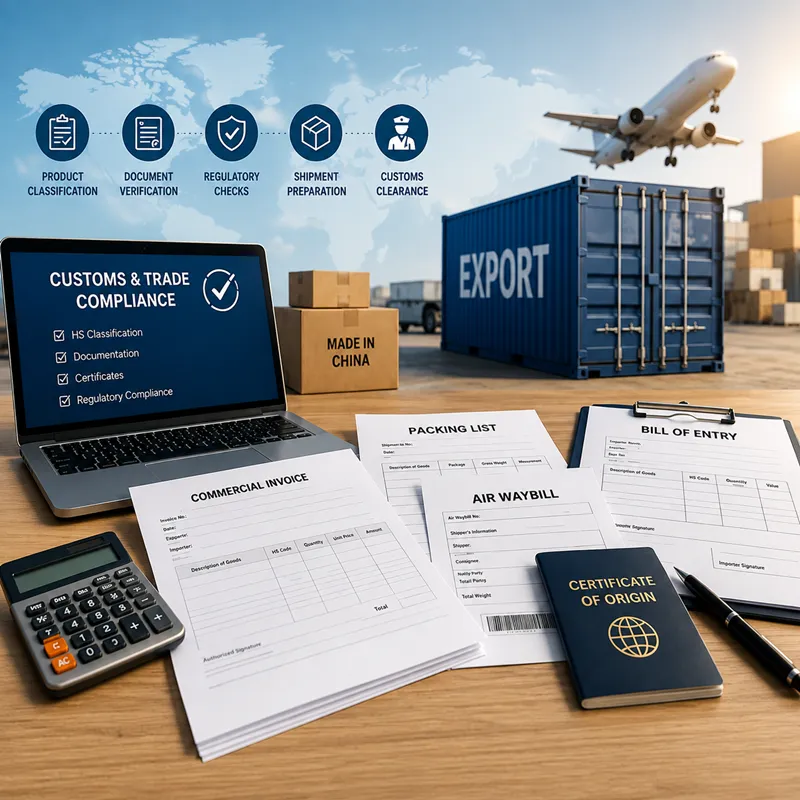
China–India logistics involves more than transportation. Importers must manage:
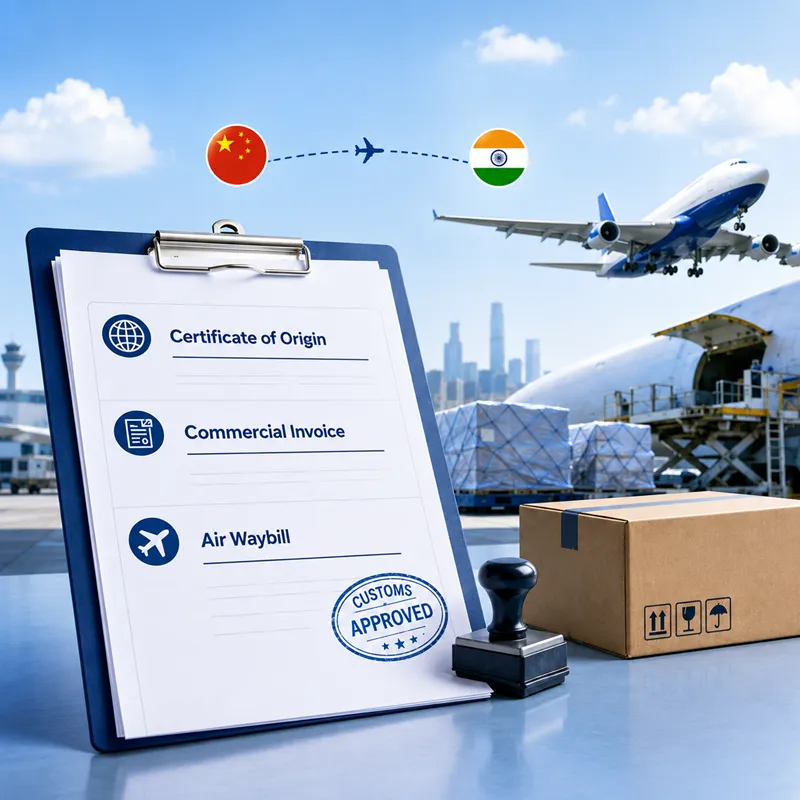
Customs documentation
Tariff changes
Import regulations
Local delivery coordination
A specialized logistics company can provide better cost control through local knowledge and integrated resources.
JTUO provides professional China-India logistics services, offering an integrated air freight solution—encompassing space allocation, warehouse consolidation, and airport delivery—to help enterprises build more predictable supply chains.
Many importers search for air India cargo when exploring air transportation options between China and India. Air cargo services connect manufacturers, suppliers, and buyers through scheduled international freight networks.
Air cargo solutions are commonly used for:
Electronics and components
Industrial equipment parts
Fashion products
Consumer goods
Business samples
High-value products
However, successful air shipping depends not only on airline capacity but also on professional shipment management.
A reliable logistics provider helps coordinate:
Supplier pickup in China
Export customs clearance
Cargo booking
International air transportation
India customs clearance
Final delivery or warehouse distribution
This end-to-end approach reduces delays and improves shipment visibility.
Transit time depends on the departure city, destination airport, customs process, and service type.
Typical air freight schedules:
| Route | Estimated Transit Time |
|---|---|
| Guangzhou to Delhi | Around 3–7 days |
| Shenzhen to Mumbai | Around 3–8 days |
| Shanghai to Bangalore | Around 5–10 days |
Factors that may affect delivery time include:
Customs inspection
Documentation accuracy
Airline schedules
Holiday seasons
Cargo classification
Preparing complete shipping documents in advance is one of the most effective ways to prevent delays.
JTUO was established in May 2025 with headquarters in Guangzhou. We are a dedicated logistics expert focusing solely on China–India shipping services.
Unlike companies that provide broad global transportation coverage, JTUO concentrates on developing deep expertise in the China–India logistics market.
Our services address the major challenges faced by importers:
Peak-season air cargo space shortage.
Unstable air freight capacity allocation.
Fragmented cargo consolidation and shipment processing.
Difficulty in securing airline capacity resources.
Inefficient multi-node logistics coordination.
By integrating diverse aviation resources, JTUO has established a comprehensive China-India logistics platform offering the following services:
Airline cargo space reservation.
Cargo consolidation at proprietary warehouses.
Flight scheduling and airport delivery.
Airport-to-airport supply chain management.
Whether you need competitive air freight cargo rates, reliable air freight from China, or professional China–India cargo solutions, JTUO provides customized logistics support based on your business requirements.
Air freight costs vary depending on shipment weight, volume, cargo type, airline route, and additional service requirements. The best way to get accurate pricing is to provide shipment details, including product type, dimensions, weight, and destination.
Air freight cargo rates are usually calculated according to chargeable weight, which is determined by comparing actual weight and volumetric weight. Other factors include fuel surcharges, airport fees, customs services, and seasonal market changes.
Air freight is usually more expensive than sea freight, but it provides much faster delivery. For urgent, high-value, lightweight, or time-sensitive products, air shipping can provide better overall value.
You can contact JTUO through our Contact Us page for a customized China–India air freight solution.
Understanding how air freight cargo rates work is essential for businesses importing from China to India. While air transportation offers speed and reliability, cost optimization requires careful planning, accurate shipment calculation, and professional logistics support.
By partnering with a specialist in China-India logistics like JTUO, companies can secure dedicated block-space or break-bulk cargo allocations. This helps resolve industry pain points—such as capacity shortages during peak seasons, insufficient flight availability, and rate volatility—thereby enhancing booking efficiency, customer satisfaction, and operational stability for freight forwarders.
For companies looking to improve delivery efficiency and control logistics expenses, professional air freight from China solutions provide a reliable pathway to smoother China–India trade.