 en
en 


Call

Accurate shipping documents are essential for China-to-India air freight. Even when the flight itself takes only a few days, inconsistent invoices, incorrect weights, vague cargo descriptions or missing certificates can delay a shipment before departure or during Indian customs clearance.
Commercial paperwork, shipment documents, transport records and customs information should all describe the same cargo consistently. A reliable documentation process also supports customs compliance, especially for batteries, chemicals, electronics and other regulated products.
Preparing these records before cargo reaches the airport is usually much easier than correcting them after airline acceptance.
Shipping documents identify the cargo, commercial transaction, transportation arrangement and information required for customs clearance.
A typical China-to-India air shipment may require:
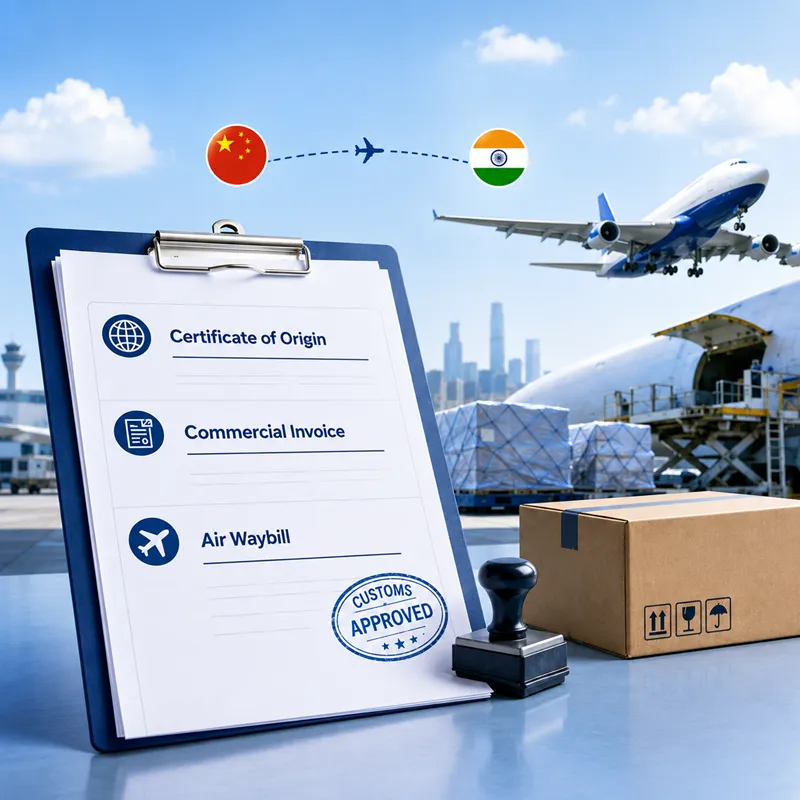
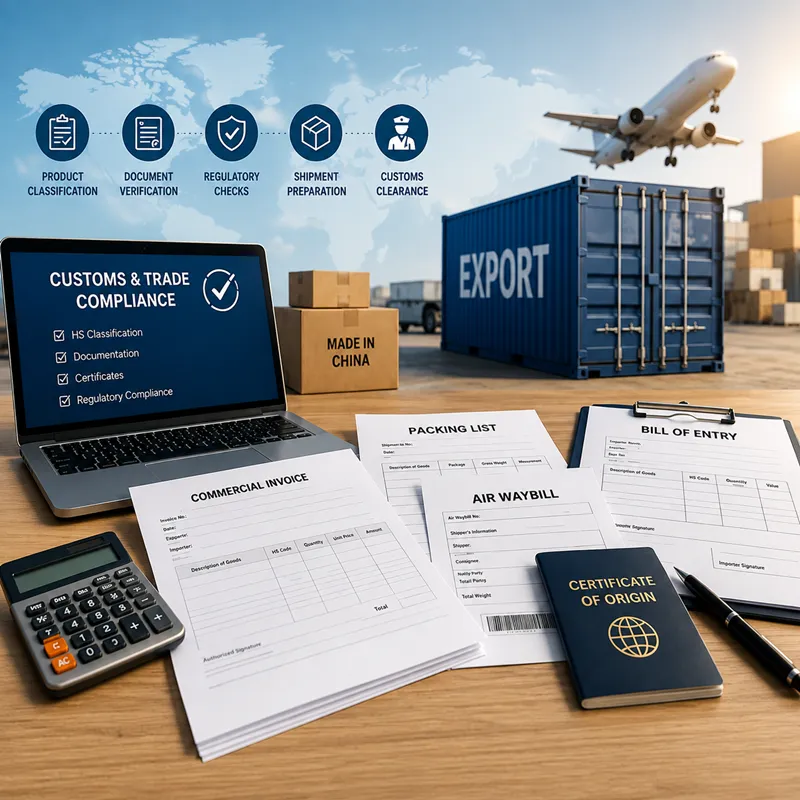
Commercial Invoice: buyer and seller, commodity description, quantity, value, currency and origin.
Packing List: package count, net/gross weight, dimensions, volume and shipping marks.
Air Waybill: shipper, consignee, routing and cargo information.
Bill of Entry: used for Indian import customs procedures.
Purchase or sales records: may support transaction details.
Certificates or licences: needed for certain controlled products.
The exact checklist depends on the commodity. A textile shipment and a shipment containing lithium batteries may require different supporting records.
The important principle is consistency. Product name, quantity, value, package count and weight should match throughout the shipping documents.
The shipping documentation process begins with exporter information and continues through booking, cargo verification, Air Waybill preparation and import clearance.
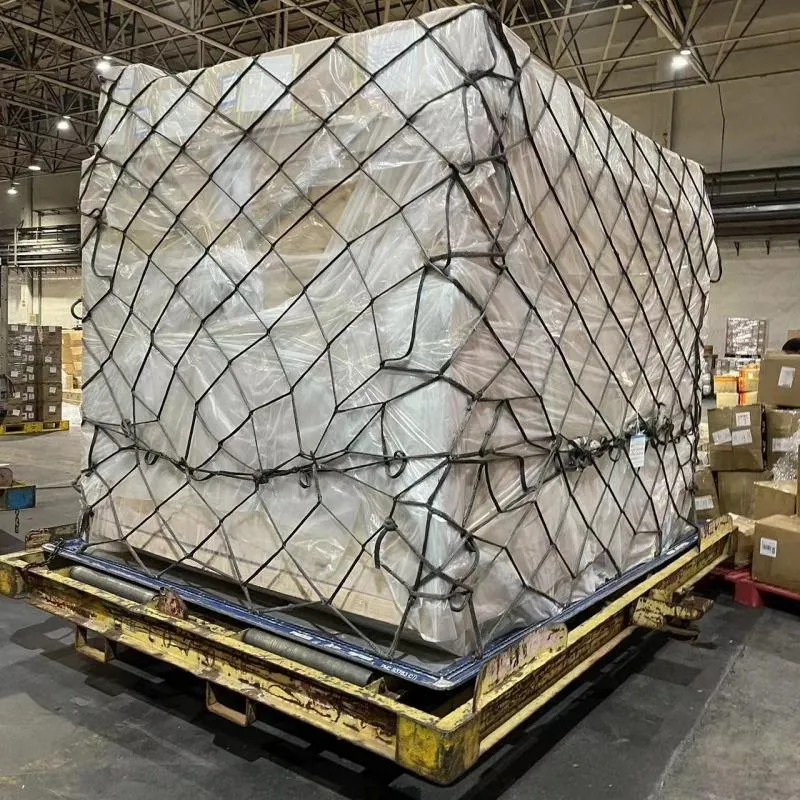
The commercial invoice and packing list normally provide the basic shipment data. Before airport delivery, the warehouse or forwarder should verify package quantity, weight, dimensions, product description and shipping marks against those documents.
If a packing list states 450 kg but the actual cargo weighs 510 kg, the discrepancy should be corrected before the final transport records are issued.
After airline acceptance, the freight documents are completed. Consolidated shipments may use both a Master Air Waybill and House Air Waybill. IATA explains that the Air Waybill forms the contract of carriage between the shipper and airline and also supports electronic processing through its e-AWB framework.
For regular China-to-India air shipping service, checking cargo data before warehouse release can reduce last-minute amendments.
A good shipping documentation process therefore follows a simple rule: verify the physical cargo first and make every later document reflect the same information.
Freight documents relate mainly to transportation, while shipment documents include the broader commercial, transport, customs and compliance paperwork associated with the cargo.
| Document Category | Examples | Main Purpose |
|---|---|---|
| Commercial | Invoice, packing list | Describe goods and transaction |
| Freight | MAWB, HAWB | Record transportation |
| Customs | Bill of Entry, declarations | Support import clearance |
| Compliance | Certificates, licences, MSDS where needed | Meet regulatory requirements |
Receiving an Air Waybill does not mean all documentation is complete. Freight documents describe transportation but do not replace commercial invoices or customs records.
Similarly, carrier received documents or cargo-acceptance information indicate that the carrier has received or processed the freight; they do not mean Indian Customs has already cleared the shipment.
The safest approach is to treat all shipment documents as one connected dataset. If quantity, cargo description, value or consignee details differ between records, corrections may be required later.
Documents required for customs clearance provide Indian Customs with the information needed to identify the goods, determine duties and confirm whether import requirements have been met.
Before arrival, the importer or customs representative should check the Bill of Entry, invoice, packing list and Air Waybill together. HS classification, declared value, country of origin and consignee information should also be reviewed.
Indian customs legislation allows a Bill of Entry to be presented before expected arrival in applicable circumstances, which makes advance preparation valuable. Buyers can review current procedures through India's Central Board of Indirect Taxes and Customs.
The exact documents required for customs clearance vary by product. Chemicals, medical goods, food, wireless devices and other regulated commodities may require additional licences, certificates or technical records.
This is where customs compliance becomes more than simply completing forms. The cargo itself must satisfy applicable import rules.
For more complex shipments, a customs clearance and compliance service can help coordinate information between the Chinese supplier, freight team and Indian importer before the cargo arrives.
The most common shipping document errors are inconsistent information, vague commodity descriptions and missing regulatory details.
Typical problems include:
invoice quantity not matching the packing list;
actual weight differing from declared weight;
descriptions such as “parts” or “accessories” being too vague;
consignee details differing between records;
incorrect or unverified HS-code information;
batteries, liquids or chemicals not declared early;
required certificates being prepared only after arrival.
Problems become harder to correct after the airline has issued the freight documents. Changes to weight, product description or consignee details may then require formal amendments.
Consolidated cargo can create additional risk because several Chinese suppliers may use different invoice formats and commodity descriptions. A cargo consolidation and warehouse service provides an opportunity to compare the physical goods against the paperwork before final shipping documents are prepared.
JTUO's practical role in this process is to coordinate cargo and document information before air-freight handover, helping reduce avoidable discrepancies between suppliers, transport records and import paperwork.
Accurate shipping documents are essential for smooth China-to-India air freight. Commercial invoices, packing lists, Air Waybills, customs declarations and supporting certificates should describe the same cargo consistently.
A structured shipping documentation process helps reduce corrections before departure and supports customs compliance after arrival. Checking shipment documents before cargo enters the airline system is usually faster and less costly than resolving errors at destination customs.
Usually a commercial invoice, packing list, Air Waybill and relevant customs records.
Freight documents are transportation records such as Master and House Air Waybills.
Shipment documents broadly include commercial, freight, customs and compliance paperwork.
Common documents required for customs clearance include the invoice, packing list, Air Waybill and Bill of Entry.
Carrier received documents generally confirm cargo acceptance or receipt by a carrier, not customs clearance.
Customs compliance helps ensure declarations, classifications and required approvals meet Indian import requirements.